


Sensory Overload in Kids Explained

How to Tell If Your Child Is Overstimulated?
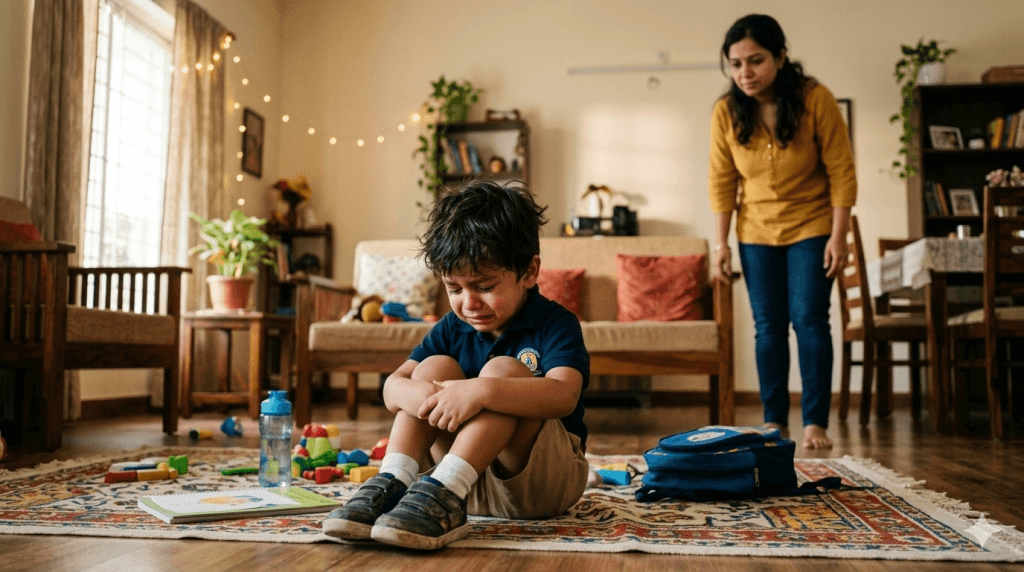
There is a particular kind of evening most parents know well. A great day out — a birthday party, a family gathering, a trip to the mall. And then, on the way home, your child completely falls apart. Tears for no clear reason. A meltdown over dinner. Refusing everything.
It is easy to assume they are tired or just being difficult. But often, what you are witnessing is something more specific: sensory overload.
What Is Sensory Overload?
Sensory overload happens when a child’s brain receives more input — sounds, lights, touch, movement, crowds — than it can process at once. Young children’s brains are still developing the ability to filter and manage all of this incoming information. When the input exceeds what they can handle, the result is a meltdown.
It is not bad behaviour. It is a nervous system that has simply had enough.Research shows that 1 in 6 children experiences sensory processing difficulties — making this far more common than most parents realise. And in busy Indian households with joint families, packed schedules, and festive seasons that stretch for weeks, children are navigating a lot of sensory input every single day.
Types of Sensory Overload
Overload doesn’t always come from the same place. It helps to know which sense is being overwhelmed:
Sound — Loud music, a crowded room, overlapping conversations, or even the TV running in the background.
Sight — Bright lights, busy patterns, fast-moving screens, or too many people in one space.
Touch — Clothing tags, certain fabrics, being hugged by too many people, or physical contact when they’re already at their limit.
Movement and activity — A day that is too long, too packed, or too unpredictable, with no quiet time in between.
Any one of these — or a combination — can push a child over the edge. And a child who handled a noisy park perfectly last week may struggle with it today, simply because they slept poorly or skipped a meal. Their threshold is not fixed. It shifts.
Do Kids With Autism and ADHD Think Differently?
Signs Your Child Is Overstimulated
Babies: Crying louder than usual, turning their face away, arching their back, clenching their fists, or going unusually still and glassy.
Toddlers and preschoolers: Tantrums that seem out of proportion, dropping to the floor, covering their ears, becoming clingy, or crying without being able to explain why.
Older children: Acting irritable, aggressive, or hyperactive — or shutting down completely in busy environments.
One thing worth knowing: some children rock, hum, or pace when they’re overwhelmed. This is not strange behaviour. It is their nervous system trying to self-regulate.
How to Help Your Child in the Moment

Step one — remove them. Get them away from the source of overload as quickly and calmly as you can. A quieter room, a corner of the house, even stepping outside.
Step two — reduce input. Dim the lights. Lower the noise. For babies, a gentle swaddle works well. For toddlers, a familiar song or quiet activity helps ease the transition back to calm.
Step three — stay calm yourself. Children regulate by borrowing from you. Your steady, quiet presence does more than any explanation.
What not to do: Don’t reason with them mid-meltdown. Don’t shame them for it. And avoid screens — they add stimulation, not calm.Once they’ve settled, gently name what happened. “That was a lot going on, wasn’t it?” Over time, this helps children build the language to recognise and manage their own limits.
Read more: Developmental Screening Tests for Children
When to Seek Support
If your child is frequently overwhelmed, or their reactions feel very intense for their age, it is worth mentioning to your pediatrician. Sometimes sensory sensitivity is part of a bigger picture — and early support makes a real difference.
At BabyMD, our developmental team helps families understand and navigate sensory and behavioural concerns. If something feels off, trust that instinct. You know your child best.
Found this helpful?
Share this article with other parents who might benefit from this information.