


Sleep Regression in Babies: Ages, Causes & Solutions That Work
Sleep Regression in Babies
Why was my baby sleeping so well — and now suddenly isn’t? If you are asking that question at 3am, you are in the right place.
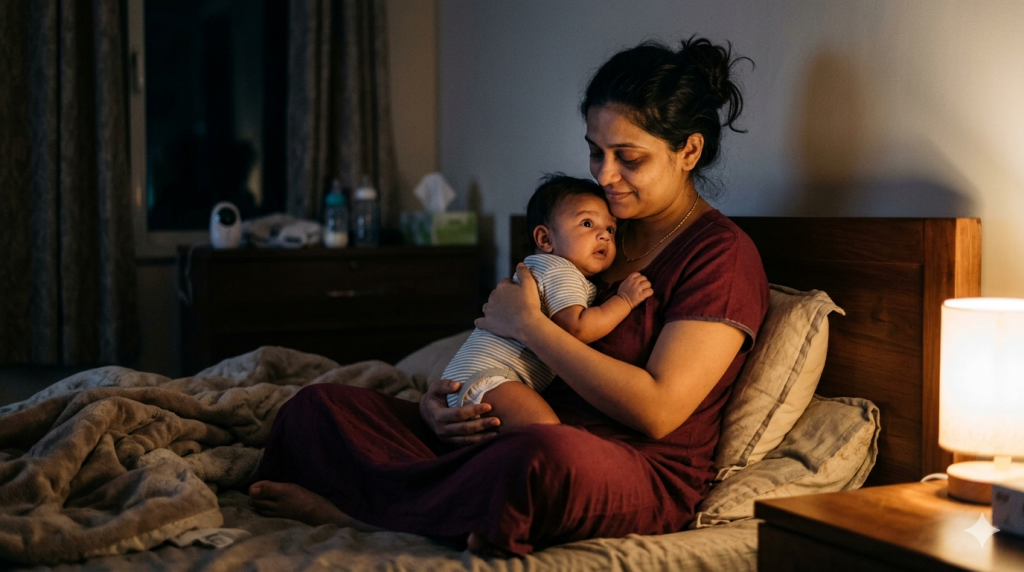
What you are most likely experiencing is a sleep regression. It is the name given to those periods — often sudden, always exhausting — when a baby who was sleeping reasonably well starts waking more frequently, napping poorly, or taking much longer to settle. It catches parents off guard precisely because it comes out of nowhere. Nothing changed. You did nothing differently. And yet here you are.
Here is what is actually going on. Sleep regression happens when your baby hits a period of rapid development — a growth in their brain, their body, or their emotional awareness — that temporarily disrupts the sleep patterns they had built. It is not a sign that something is wrong. In fact it is usually the opposite: your baby’s brain is working hard, growing fast, and sleep is taking a back seat while that happens.
It is temporary. It does have an end. And knowing what is driving it — and when each phase tends to hit — makes it significantly easier to get through.
Here is everything you need to know, broken down by age.
First, a Honest Word About the Term
Sleep regression is everywhere online. But it is worth knowing that the term does not have a formal medical definition, and the published research on it is limited. What doctors and sleep researchers agree on is this: babies go through predictable developmental periods that frequently disrupt sleep, and these cluster around certain ages. Calling them regressions is a useful shorthand, even if sleep is not truly going “backwards” — your baby is not unlearning anything. They are just temporarily overwhelmed by everything they are learning.
This matters because it shapes how you respond. It is not a problem to fix or a mistake you made. It is a phase to ride out — with the right support.
When Does Sleep Regression Happen?
Sleep regressions commonly occur around 4, 6, 8, 12, 18, and 24 months — though not every baby experiences every one, and they can happen slightly earlier or later depending on your child’s individual development. Here is what tends to drive each one:
4 months — this is widely considered the most significant regression, and unlike the others, it represents a permanent change. Around 3 to 4 months, a baby’s sleep matures — they begin sleeping in stages and cycles, similar to adults. Where a newborn could fall into deep sleep almost instantly, a 4-month-old now cycles through lighter sleep stages and is more likely to wake between cycles — especially if they needed help to fall asleep in the first place.
6 months — increased mobility, like rolling and beginning to sit, can cause restlessness. Many babies are also starting solid foods around this time, which can temporarily affect sleep.
8–10 months — babies at this age are learning to crawl, pull up to stand, and find their voice. Separation anxiety also commonly peaks at this stage, making settling at naps and bedtime harder. The good news is this regression tends to be shorter — usually a couple of weeks.
12 months — even babies who have started sleeping through the night may suddenly struggle to fall asleep or wake frequently. Walking, early language development, and the transition from two naps to one all play a role.
18 months — a big one for toddlers. Independence is surging, separation anxiety often reappears, and the 18-month developmental leap brings a lot of new awareness and emotion that can make settling very difficult.
2 years — life changes like a new sibling, starting daycare, or toilet training commonly trigger sleep disruption at this age, alongside the natural developmental surge of the second year.
What Does It Actually Look Like?
Every baby is different, but common signs include sudden frequent night wakings after a period of sleeping well, naps becoming shorter or more difficult, taking much longer to settle at bedtime, increased clinginess or fussiness around sleep times, and — in older babies — outright refusal to go down.
The key word is sudden. If your baby has always been a tricky sleeper, that is a different conversation. Sleep regression is specifically the shift from a baby who was managing reasonably well to one who suddenly is not.
Why the 4-Month Regression Deserves Special Mention
Most regressions are temporary disruptions. The 4-month regression is different — because the change in sleep architecture that causes it is permanent. The 4-month sleep regression is a developmental phase when babies who were sleeping well may suddenly start waking up more often and have trouble settling back to sleep, caused by neurological development that changes how your baby cycles through sleep.
This means that while the regression phase itself passes, the sleep cycle change does not. How smoothly your baby transitions depends a lot on whether they have learned to fall asleep independently. A 4-month-old who is fed, rocked, or otherwise helped to sleep is more likely to see increased night wakings, because each time they cycle through lighter sleep, they need that same help to get back to sleep.
This is the window — if there is one — where gently encouraging independent sleep habits makes the biggest long-term difference.

What Actually Helps
There is no magic solution, and anyone who tells you otherwise is probably selling something. But these approaches are consistently supported by paediatric sleep research:
Stick to your routine. A predictable bedtime routine — bath, feed, quiet time, sleep — signals to your baby’s brain that sleep is coming. A consistent bedtime routine has a dose-dependent association with better sleep outcomes in young children. When everything else feels disrupted, the routine becomes the anchor.
Watch wake windows. Overtired babies are harder to settle and more likely to wake overnight. An overtired 4-month-old has a wake window of roughly 1.5 to 2 hours. Keeping naps on track prevents the exhaustion spiral that makes regressions worse.
Keep the sleep environment consistent. Dark room, white noise or a fan, a comfortable temperature. In Indian homes with joint families and busy evenings, creating a consistently calm sleep space can make a real difference — even if it means a corner of the room with the lights dimmed.
Put them down drowsy but awake — where possible, and age-appropriate. This is the foundation of independent sleep. It does not mean leaving them to cry; it means giving them the opportunity to practice falling asleep without needing you to do it for them.
Respond — but give it a moment. Not every sound at 3am needs an immediate response. Give your baby a brief window to see if they settle. Some will. The farther from their crib they move and the more time they spend with you in the night, the more stimulated they may get — making it harder, not easier, to go back to sleep.
Look after yourself too. Sleep deprivation affects your ability to respond calmly and consistently — which in turn affects your baby. If you have a partner, take turns. Nap when you can. This phase is temporary, but you need to be functioning to get through it.
How Long Does It Last?
Sleep regression is temporary, usually lasting between three and six weeks before babies settle back into a more normal routine. The 4-month regression can feel longer because the underlying sleep architecture change is permanent — but most families find things stabilise within four to six weeks once they adapt their approach.
If things are not improving after six weeks, or if your baby seems unwell, is not gaining weight, or sleep disruption seems extreme, it is worth speaking to your paediatrician — because occasionally what looks like a regression is something else, such as reflux, an ear infection, or a feeding issue that needs addressing.
A Note for Indian Parents
Sleep regressions can feel especially hard in Indian households where nights are rarely truly quiet, multiple family members may be involved in settling the baby, and there is often conflicting advice from all sides about what babies “should” be doing at each age. A few things worth knowing: there is no single right way to manage sleep regression, and what works in one household will not work in every household. What matters most is consistency — whatever approach you take, sticking to it gives your baby the best chance of adjusting quickly.
When to Talk to Your Paediatrician
Most sleep regressions resolve on their own. But come in if:
- The regression has lasted more than six weeks with no improvement
- Your baby seems unwell, is running a fever, or is not feeding well
- You are concerned your baby is not gaining weight
- The sleep disruption is severe enough to be affecting your own mental health significantly
- Your baby is older than 6 months and has never slept for longer stretches
At BabyMD, our paediatricians are here to help you separate what is developmental from what needs attention. If you are exhausted and unsure, a conversation with one of our doctors will give you clarity and a practical plan. Call us on 6366447363 or book an appointment online.
Sleep regressions do end. You will get there.
Found this helpful?
Share this article with other parents who might benefit from this information.