
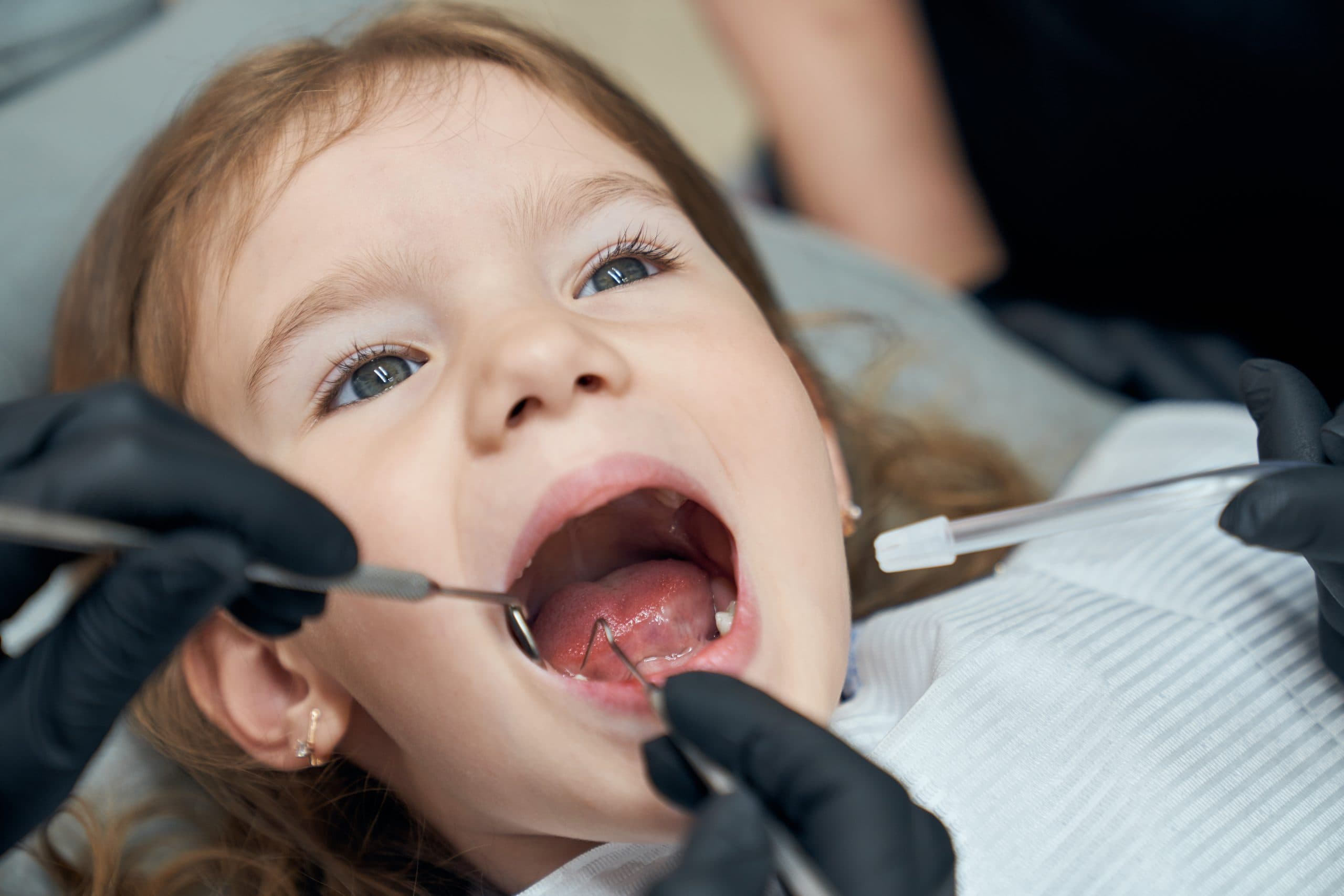


Preventive Dental Care for 0–3 Year Olds

When Should My Baby See a Dentist? Preventive Dental Care for 0–3 Year Olds
Most parents schedule their baby’s first dental visit far too late. If your child hasn’t seen a dentist by their first birthday, you’re not alone — but the science is clear on why starting earlier makes a significant difference.
Both the Indian Academy of Pediatrics (IAP) and the Indian Society of Pedodontics and Preventive Dentistry (ISPPD) recommend a baby’s first dental visit within six months of their first tooth erupting, and no later than age one. Yet most Indian children see a dentist for the first time well after age seven — and almost always because something already hurts
But the good news is preventive dental care for babies is simple and starting early changes everything.
Read more: Preventive Dental Care for 0–3 Year OldsWhy Milk Teeth Matter More Than You Think
Baby teeth are not just placeholders. They are doing critical work from the moment they arrive.
Those small first teeth guide jaw development, help your child chew and digest food properly, and directly shape how they learn to speak. Sounds like “f,” “s,” and “th” depend entirely on how the tongue meets the teeth. When teeth are missing, decayed, or misaligned early, those sounds don’t form the way they should.
Milk teeth also hold space in the jaw for permanent teeth. When a primary tooth is lost too soon — most often because of decay — nearby teeth drift into that gap. The result is crowding, misalignment, and orthodontic problems that no parent planned for and that are far more complex to treat later.
Early Childhood Caries in India: The Numbers Every Parent Should Know
Tooth decay in young children is the most common chronic childhood disease in India — more common than asthma.
A meta-analysis of 71 Indian studies, published in the Indian Journal of Public Health (2022), found that nearly 1 in 2 children in India — 46.9% — has Early Childhood Caries (ECC). That figure was drawn from over 69,000 participants across the country. A separate meta-analysis of 70 studies, published in the Journal of International Society of Preventive and Community Dentistry (2021), found that dental caries affects 52% of Indian children between ages 3 and 18 — more than half.
What makes this more striking is how early it begins. By the time most Indian children have their first dental visit, decay has often already been progressing silently for years.
Research consistently shows that children who see a dentist before their first birthday have significantly lower rates of decay and treatment needs in their early years. Prevention costs far less — in every sense — than treatment.
More for you: How to Strengthen Your Baby’s Muscles
What Happens at Your Baby’s First Dental Visit
If bringing a 10-month-old to a dentist feels strange, here is something reassuring: the first visit is less about the baby’s teeth and more about you.
A pediatric dentist will walk you through gum care before teeth even arrive, when to introduce a toothbrush, how much fluoride toothpaste is safe (a rice-grain-sized smear from the very first tooth), and when to wean off the bottle — ideally by 12 to 14 months. They will also check your baby’s mouth for tongue ties, early signs of decay, or anything affecting feeding and speech development.
This visit is also about building a relationship. A child who has visited the dentist since infancy does not grow up associating it with fear or pain. That matters for the rest of their life.

Preventive Dental Care Guide: 0–3 Years
Birth to 6 months: Wipe gums after every feed with a soft, damp cloth. No teeth yet, but bacteria are already present in the mouth.
6 months — first tooth appears: Switch to a soft-bristled infant toothbrush. Use a rice-grain smear of fluoride toothpaste. Book that first dental visit now.
12 months: Your baby’s first dental visit should have happened by this milestone. Begin weaning from the bottle if you haven’t already.
18–24 months: All 20 primary teeth are typically in by now. Brush twice daily. Never put your child to sleep with a bottle of milk or juice — this is one of the leading causes of early tooth decay in Indian children.
3 years: By this age, dental visits should feel like a normal, familiar part of your child’s routine — not something to be anxious about.
3-min read: The Ultimate Guide to Modern Parenting
The Habit You Build Now Follows Them for Life
There is something quietly powerful about starting preventive dental care early. A child whose gums were wiped since infancy, whose teeth are brushed every night, and who sees the dentist as a familiar and friendly place — that child carries a completely different relationship with their oral health into adulthood.
The habits that prevent decay, gum disease, and structural problems are not built in a clinic. They are built at home, modelled by parents, and reinforced through early, consistent care.
If you are not sure where to begin, BabyMD’s Pediatric Dental Care is designed for exactly this stage. Our pediatric dental team supports infants and toddlers with first dental checks, dietary counselling, fluoride treatments, and oral habit guidance — in a setting that is gentle, unhurried, and built to make children feel safe. The goal is not just a healthy report at each visit. It is a child who never dreads the dentist.
If your baby hasn’t had their first dental visit yet, now is exactly the right time to start.
Found this helpful?
Share this article with other parents who might benefit from this information.